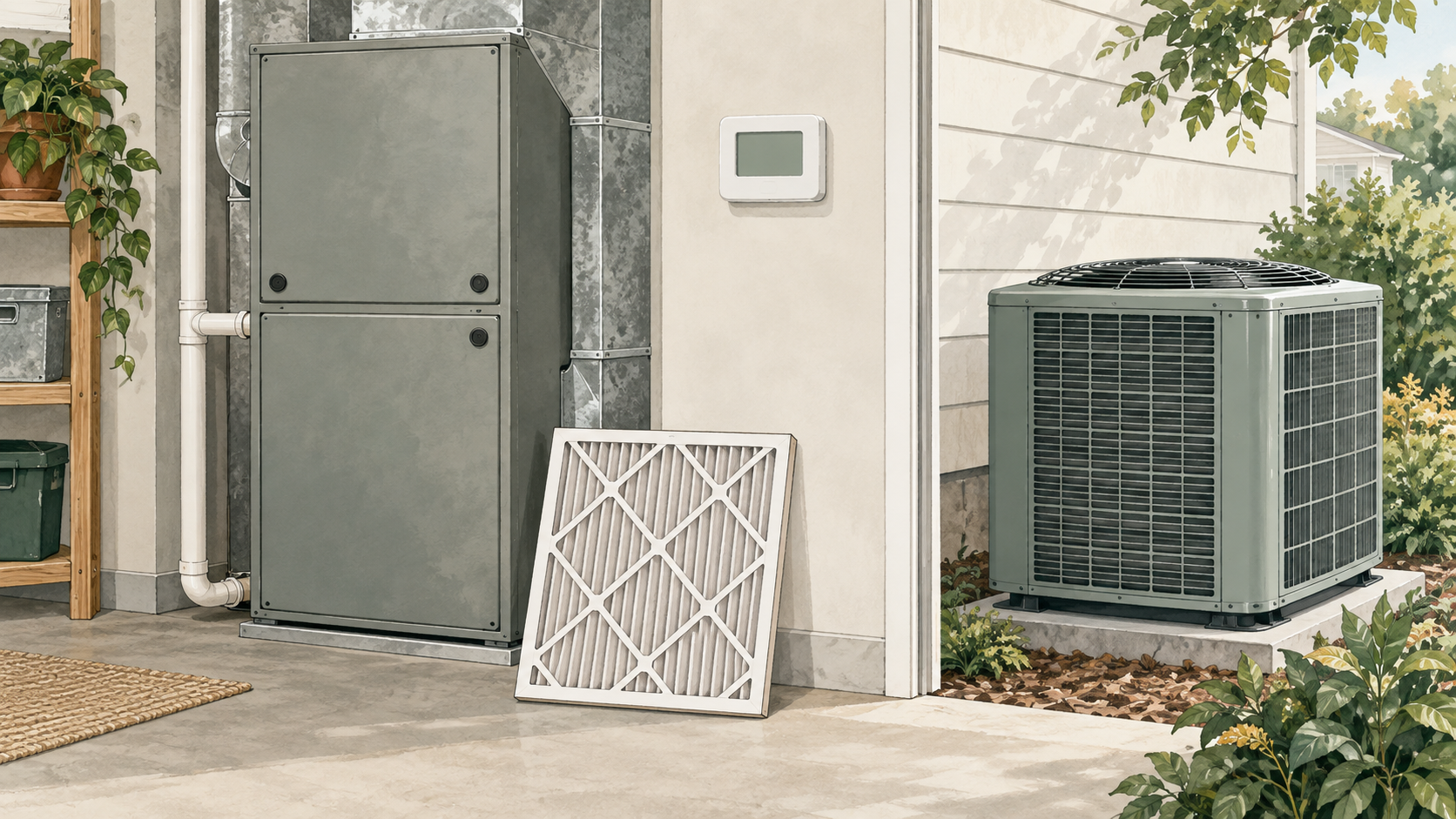
“Service the HVAC” is a vague reminder. A useful plan names the equipment, the work it needs and the person responsible. Start with a short inventory, then build a calendar from the manufacturer’s instructions and your technician’s recommendations. That small amount of organization makes the next appointment easier to book and the resulting advice easier to assess.
Start with an equipment list
Ask your technician to identify each heating and cooling system, the rooms it serves and the thermostat that controls it. Save the manufacturer, model and serial number, installation date if known, manual and installer contact. Use practical names such as “upstairs system” alongside the technical description.
Do not infer the system from one visible component. A house may have equipment serving different additions or floors. Your inventory should make it clear what a service visit covers. Include separate ventilation, humidity-control or air-cleaning equipment in the conversation, and ask whether it needs its own maintenance plan. A blank field is useful: it shows exactly what to ask at the next visit.
Give each filter its own instructions
ENERGY STAR advises checking filters monthly, especially during heavy use. Inspection and replacement are different tasks: filter type, household conditions and use affect when cleaning or replacement is needed. Follow the equipment and filter instructions instead of applying one replacement interval to every filter in the house. 1, 2
Ask the technician to show you each user-serviceable filter and record its exact specification, where it fits and whether it is disposable or washable. Have them demonstrate the permitted procedure safely. If access is awkward or the task goes beyond the owner’s instructions, include it in the service arrangement. Carrier’s filter guidance explicitly offers professional help for owners uncomfortable checking filters. 2
A useful reminder says “check upstairs return filter; specification in record,” rather than simply “HVAC.” Keep a compatible spare if your system uses disposable filters. Ask before changing the specified filter type; suitability belongs to the equipment, not just the dimensions of the opening. 2, 3
Schedule for heating and cooling
ENERGY STAR recommends annual professional checks before the relevant season: cooling in spring and heating in fall. This is a sensible starting point for the calendar. It is not a universal rule that every appliance requires two identical visits each year. Ask the contractor to explain what each visit covers for your particular equipment. 4
For a system used for both heating and cooling, the seasonal work may differ. Carrier, for example, recommends at least annual heat-pump service and ideally spring and fall visits. Follow your model’s requirements and document the proposed schedule. 5 The question to settle is “What needs checking, and when?” rather than simply choosing the largest or smallest maintenance package.
Know what a proper visit should address
ENERGY STAR’s checklist includes controls, electrical connections and condensate drainage, with cooling checks for coils, refrigerant and airflow. Fuel-burning heating equipment has additional checks involving combustion, fuel connections and the heat exchanger. Those are professional tasks; the exact scope depends on the equipment. 4
Ask for a report identifying what was inspected, any measured findings, work completed and remaining recommendations. Refrigerant work, electrical testing and internal mechanical service require appropriate professional expertise. 5 Do not turn a list of contractor tasks into a DIY checklist. Your useful contribution is a clear account of how the house has been behaving.
Bring observations, not a diagnosis
Before the appointment, write down the rooms, times and conditions associated with a comfort concern. “The upstairs bedroom was warmer than the landing on three afternoons” gives the technician more to work with than “the system is bad.” Include the thermostat setting and any recent building work or change in how rooms are used.
Bring an unusual sound, repeated error message, visible leak or performance change to the technician’s attention rather than waiting for the next routine visit. Carrier identifies persistent operating problems as reasons for professional assessment. 5 Record what you noticed without opening equipment or attempting to adjust internal components.
Close the visit with a practical plan
Keep the report and invoice with the equipment record. Separate a completed repair from an optional improvement and an unresolved concern. If replacement is proposed, request the findings behind that recommendation and a written scope before deciding.
- Which systems did this visit cover, and what was excluded?
- Which filter specification and checking schedule should we follow?
- Is there a finding we should act on now, and what supports it?
- What should we observe after the visit to know whether the concern is resolved?
- When is the next service due, and what work will it include?
Make the next reminder specific
Name the system, attach its instructions, record the agreed work and assign the next date. A useful maintenance plan explains the appointment rather than merely reminding you to make one.