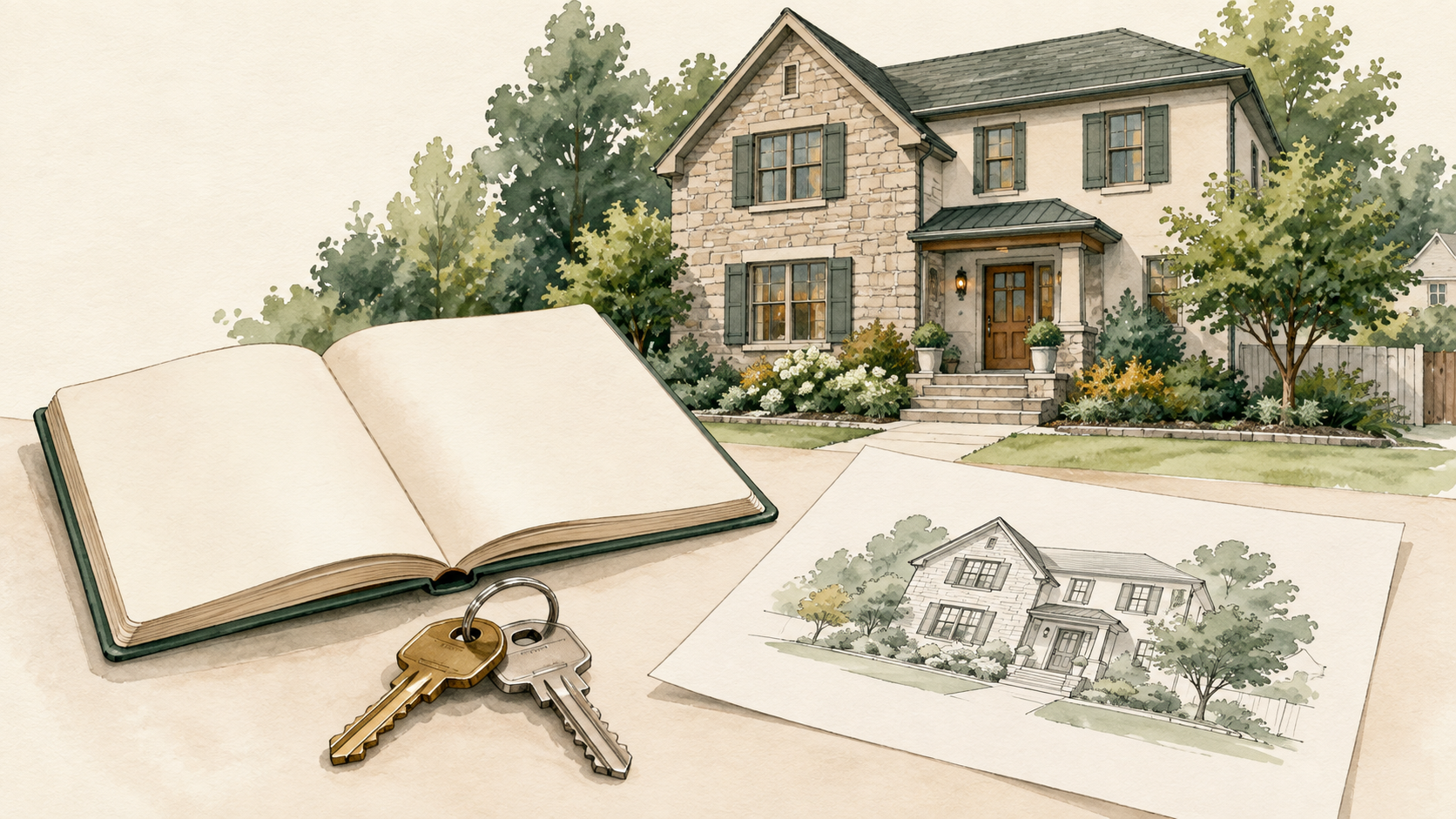
The first year in a home is a chance to learn how it works. Where does rain collect? Which room warms up first? Who last serviced the heating? You do not need every answer on moving day. Start by making the important information easy to find, then turn what you learn into a short, realistic plan. The same approach works for an old house, a new build or a second home.
In the first week, learn the essentials
Walk through with the previous owner, builder, inspector or a qualified service professional if possible. Ask them to identify the main water shutoff, electrical panel and any fuel shutoff, and photograph their locations. This is an orientation, not an invitation to test unfamiliar valves or open equipment. Philadelphia Water specifically encourages owners to locate water shutoffs before an emergency. Water Department guidance.
Make a household contact sheet: emergency services, utility emergency lines, a plumber and your heating contractor. Keep an offline copy. If you smell gas or suspect a leak, leave and contact your utility from outside; do not investigate it yourself. PECO gas safety guidance.
By day 30, give your home a record
Gather the documents already scattered across email, moving boxes and a kitchen drawer. Keep originals, including the inspection report, survey, available plans, warranties, service invoices and work completed before closing. For a new build, request the handover information and note any outstanding items alongside the relevant correspondence.
Organize by the part of the home: roof, kitchen, heating, garden. Give each document a useful name and date. Photograph accessible equipment labels so a service company can identify the model before a visit. Record what you know about installation dates; mark an uncertain date as unknown instead of guessing.
Separate an observation from a diagnosis. 'Water mark on dining-room ceiling, photographed September 12' is useful. 'Roof failure' is a conclusion to confirm. Add the person responsible for investigating and the agreed next step.
Learn the systems you have
Make a short inventory of the systems that apply to your property: heating and cooling, hot water, drainage, irrigation, security, well, septic, pool or generator. A smaller home may need only a few entries. A larger property may have several units serving different areas.
At the next service visit, ask three questions: What does this serve? What can I check safely? What needs professional attention, and when? Ask for the answers in the service note. ENERGY STAR recommends annual professional checks before the heating and cooling seasons; the equipment manual and your contractor should guide the details. Maintenance checklist.
Build a small, sensible maintenance plan
Use the inspection findings, manuals and service advice to make three lists: address now, schedule this year, and consider later. Put active leaks and safety concerns ahead of cosmetic work. EPA guidance emphasizes fixing the source of moisture promptly, rather than treating a stain as the whole problem. Moisture guidance.
Give every scheduled item an owner, a due window and a reason. 'Ask the heating company to inspect before cold weather' is more useful than 'HVAC.' Combine related questions into one visit. Keep routine service costs separate from possible repairs, then obtain actual estimates for the work you plan. A generic maintenance allowance cannot tell you what your particular roof or boiler needs.
Let the first year teach you
After rain, look from safe, accessible places for recurring puddles, overflowing gutters or new damp patches. Through each season, note comfort problems and changes in utility use without immediately assuming a cause. Dated observations help a professional ask better questions.
At six months, close completed items and remove reminders that do not apply. At a year, review service records, recurring issues and the improvements you still want. If you own several homes, keep the same basic structure for each, with its own equipment and local contacts. The result should be easier decisions, not a longer to-do list.
Start with one useful record
Find the inspection report, photograph the equipment labels you can safely reach, and book the first necessary service visit. Keep the resulting notes together. Your home record will grow from the work you actually do.