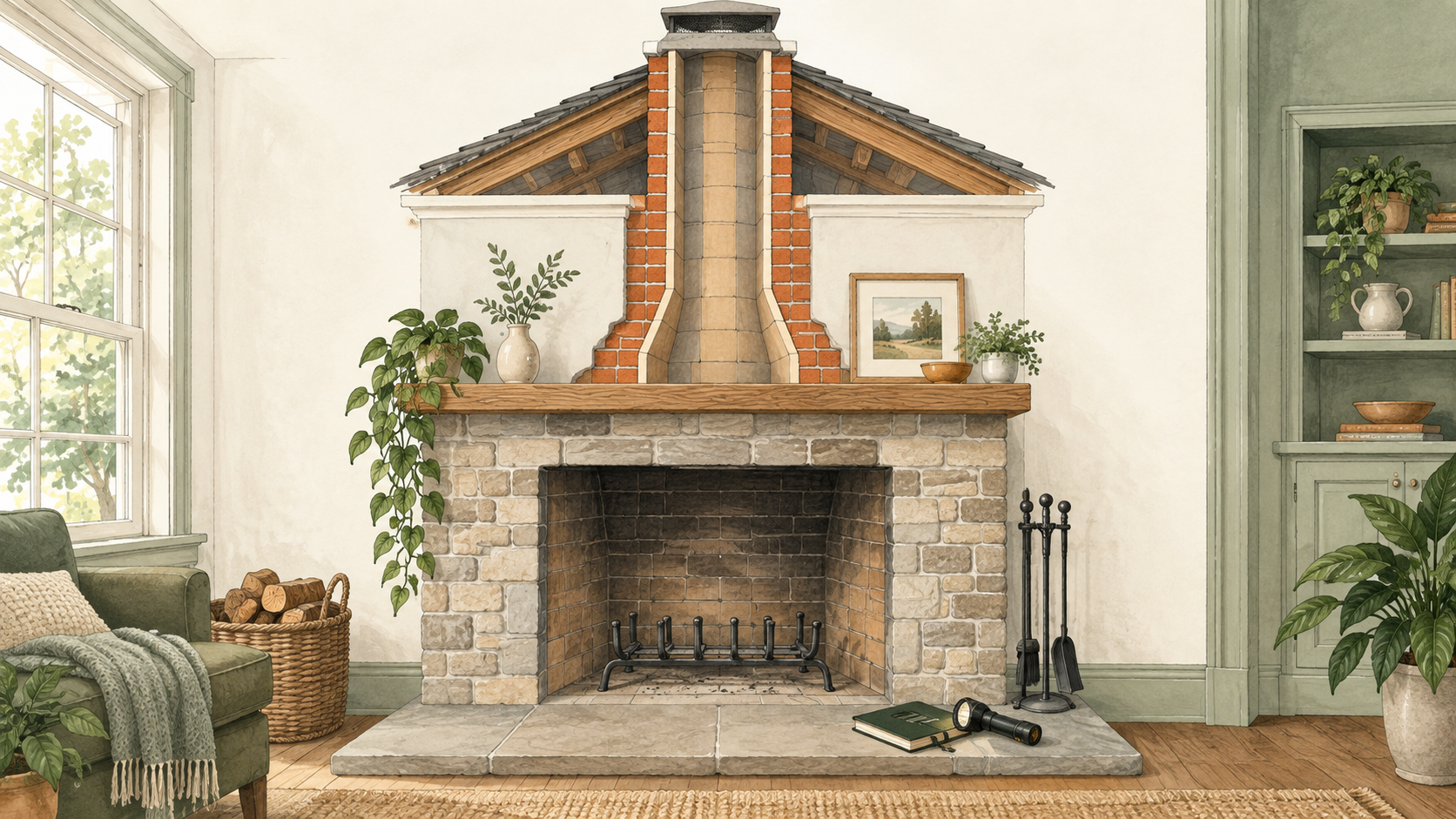
A fireplace can be used only a handful of evenings and still deserve a place on the maintenance calendar. Start with two questions: what system is installed, and when was it last professionally inspected? The answers make it easier to book the right person, understand the work and decide what needs attention before the next fire.
First, identify what you own
Record whether you have an open wood-burning fireplace, an insert, a stove or a gas appliance. Find the manufacturer and model where available, and obtain the correct owner’s manual. Manufacturer instructions belong to the specific model; a video for a similar-looking fireplace is not a substitute. Heat & Glo, for example, directs owners to find the exact model for installation and service information. 2
Ask the technician to describe the venting arrangement in plain language and label the appliance in the report. In a house with several fireplaces, “chimney inspected” is too ambiguous. Use room names and match every report to the system it covers.
Book inspection, then the work it calls for
The Chimney Safety Institute of America, citing NFPA 211, recommends inspection of chimneys, fireplaces and vents at least annually, with cleaning, maintenance and repairs when needed. Limited use does not remove the inspection need: obstructions or deterioration can develop even when fires are infrequent. 1
When booking, distinguish the inspection from sweeping and appliance servicing. Ask what is included, what would trigger further investigation and how findings will be documented. Let the qualified professional determine the appropriate inspection and cleaning for your system and history. If you recently moved in or cannot find a report, say so before the appointment rather than assuming the previous owner arranged it.
Wood and gas need different attention
For wood-burning systems, deposits in the chimney are part of the inspection and cleaning decision. Chemical chimney-cleaning products do not replace professional inspection and mechanical cleaning when needed. Gas is not an exemption: where gas equipment vents through a chimney, debris or deterioration can still interfere with that route. 1
Arrange gas-appliance service with a technician qualified for that appliance, following its manual. Do not attempt burner, fuel-supply or venting repairs yourself. For either fuel, keep combustible furnishings and belongings at least three feet from the heat source, and follow any greater clearance required by the appliance instructions. 2, 3
Know when to stop using it
If a wood-burning appliance sends smoke or a smoke smell into the room, stop using it and arrange professional assessment; do not keep lighting test fires to see whether the problem resolves. EPA identifies indoor smoke as a reason to shut down the appliance and call a professional. 4
If a carbon monoxide alarm sounds, everyone should leave immediately and call the fire department from outside. Do not re-enter until responders say it is safe. 5 If you smell gas or suspect a gas leak, leave immediately and call your gas utility from a safe outdoor location. Do not operate electrical devices, use a phone inside or try to shut off the gas service. 6
For a suspected chimney fire, evacuate and call 911. After an apparent chimney fire, keep the system out of use until it has been professionally evaluated and any necessary work completed. Firefighters extinguishing the fire is not the same as a chimney inspection. 7, 10
Include the alarms in the plan
USFA recommends smoke alarms in every bedroom, outside sleeping areas and on every level, including the basement, with monthly testing. Its carbon monoxide guidance recommends CO alarms outside each separate sleeping area and on every level. Follow each alarm’s installation and replacement instructions, and use a qualified electrician for hardwired installation. 8, 9
Keep the alarm model and installation date with the fireplace record. Give everyone in the household the same simple instructions for an alarm or gas smell. Put the emergency contact information somewhere accessible without opening a maintenance app.
Leave the visit with a clear answer
Ask the technician to separate work completed from recommendations and unresolved findings. Keep the report, photographs, invoice and relevant manual together. If a repair is proposed, request the location of the defect, the recommended remedy and the next step before use resumes.
- Which appliance, chimney and vent were included in this visit?
- Was cleaning needed, and was it completed?
- Is anything still preventing use, and who will confirm it has been resolved?
- What should we watch for, and when should this system be inspected again?
A better seasonal ritual
Before planning the first fire, find the last report, identify the exact appliance and arrange the appropriate professional inspection. Keep the outcome, not just the appointment, on record.
Sources & further reading
- CSIA: Homeowner questions on inspections, sweeping and gas chimneys
- Heat & Glo: Model-specific fireplace manuals
- USFA: Heating fire safety
- EPA: Wood-burning installation and maintenance (archived program guidance)
- NFPA via CPSC: Get to know carbon monoxide alarms
- PECO: Natural gas safety brochure
- CSIA: Preventing chimney fires and assessment after a fire
- USFA: Smoke alarms
- USFA: Carbon monoxide poisoning prevention
- CSIA: What happens after a chimney fire